
The internet will tell you to “bounce back”. Your body will tell you something quieter: heal first, then rebuild.
Exercising after giving birth is less about a comeback montage and more about a stepwise return – walking and pelvic floor work early on, a proper check-in with your GP, then gradual strength and, later, higher impact if that is what you want. Done kindly, movement can support mood, energy and confidence. Done too fast, it can aggravate a pelvic floor that is still recovering.
This guide is for women in Cheam, Sutton and nearby. It is not medical advice. Births differ. Caesareans, tears, assisted deliveries and twin pregnancies change the timeline. Your midwife, GP or a pelvic health physiotherapist should guide anything that feels unclear.
The early weeks: gentle is not “doing nothing”
After an uncomplicated vaginal birth, NHS Inform and NHS postnatal leaflets encourage gentle walking and pelvic floor and deep tummy exercises when you feel ready – sometimes within days. That is not a licence to run a 5K. It is permission to leave the sofa for a short walk and to reconnect with the muscles that held a pregnancy.
Pelvic floor first
Pregnancy and birth stretch the pelvic floor. The NHS explains how pelvic floor exercises can help with leaking and support recovery, and how to build up long and short squeezes through the day. Breathing matters: keep inhaling and exhaling normally, and avoid bracing your tummy hard every time you squeeze.
If you leak when you cough, jump or lift, or you feel heaviness or bulging, speak to your GP or midwife. Early help is ordinary and useful – not a failure.
Walking before workouts
Pushing a buggy around Cheam Common or along London Road counts. Build duration slowly. Hydrate, especially if you are breastfeeding. A supportive bra helps. Feed before you head out if that makes you more comfortable.
After a caesarean or a complicated birth
Your recovery takes longer. Wound healing, blood loss, tears and exhaustion all change what “ready” means. Ask your midwife, health visitor or GP before you progress beyond gentle walking and the exercises they have given you. There is no badge for rushing.
The 6 to 8 week postnatal check
Your NHS postnatal check at around six to eight weeks is a good moment to talk about exercise, pelvic floor symptoms, mood and pain. Many women wait until after this appointment – and a clear go-ahead from their GP – before returning to higher-impact activity such as running, jumping or intense classes.
The UK Chief Medical Officers’ guidance on activity after childbirth notes that after the 6 to 8 week check, and depending on how you feel, more intense activity can resume gradually, building from moderate toward vigorous over a period of months rather than days. See the pregnancy and after childbirth activity guidelines for the official framing.
Use the check. Write questions down. Leaking, a gap in your tummy, back pain and low mood are all fair topics.
Diastasis recti: common, not a catastrophe
Diastasis recti (also called divarication) is a separation of the two long abdominal muscles. The NHS describes how to feel for the gap and notes that it usually improves by the time your baby is around eight weeks old. Regular pelvic floor and deep stomach muscle exercises can help. Standing tall and looking after posture matters too.
If a clear gap is still obvious at around eight weeks, contact your GP. You may be referred to a physiotherapist. Early on, avoid sit-ups, planks and high-impact exercise, and be careful with heavy lifting and straining.
A coach-led screen can sit alongside that medical care. It does not replace it.
A gradual progression that respects healing
Think in layers, not leaps:
- Breath, pelvic floor and gentle walking – as soon as you feel ready and your clinicians agree.
- Deep core connection and easy strength – sit-to-stand, hip hinges with light load, rows, carries that do not spike symptoms.
- Steady strength training – after your postnatal check, build load when technique stays clean and you have no leaking, heaviness or pain that worries you.
- Impact – running, jumping and high-impact classes later, when strength and pelvic floor control are there. NHS Inform suggests waiting at least three to six months before jogging or aerobics; your own recovery may need longer.
Tell every instructor you have recently had a baby. Rest between sessions. Sleep will be fragmented – progress will be too. That is normal.
Signs to pause
Stop and seek advice if you notice:
- leaking that is new or getting worse with exercise
- heaviness, bulging or dragging in the pelvic floor
- wound pain, redness or discharge after a caesarean or tear
- sharp pelvic or back pain that does not settle
- dizziness, chest pain or feeling generally unwell
Pushing through those signals is not toughness. It is a detour. Your GP, midwife or a pelvic health physiotherapist can help you reset the plan.
Mindset and realistic expectations
Your body grew a human. Nine months up, and often longer than nine months back, is a humane timescale. Strength will return. Clothes will fit differently for a while. Some days the win is a ten-minute walk and a glass of water.
Compare yourself to your last good week, not to a stranger online. Celebrate consistency: three short sessions beat one heroic blow-out followed by pain. If mood feels heavy or flat, say so at your postnatal check or sooner – physical recovery and mental health travel together.
How Be More Studio can help
Be More Studio is a women’s wellness hub in North Cheam. The studio specialises in women’s health and fitness, including the months and years after birth – whether your baby is eight weeks or eight years old.
Right Start assessment
Our Right Start assessment is a one-hour coach-led session looking at posture, core, pelvic strength and a diastasis check, with a clear suggestion for what to do next. It is not a medical diagnosis and it is not the same as a physiotherapy assessment. If you have pain, leaking or a concern about recovery, speak to your GP or a pelvic health physiotherapist as well.
Postnatal fitness
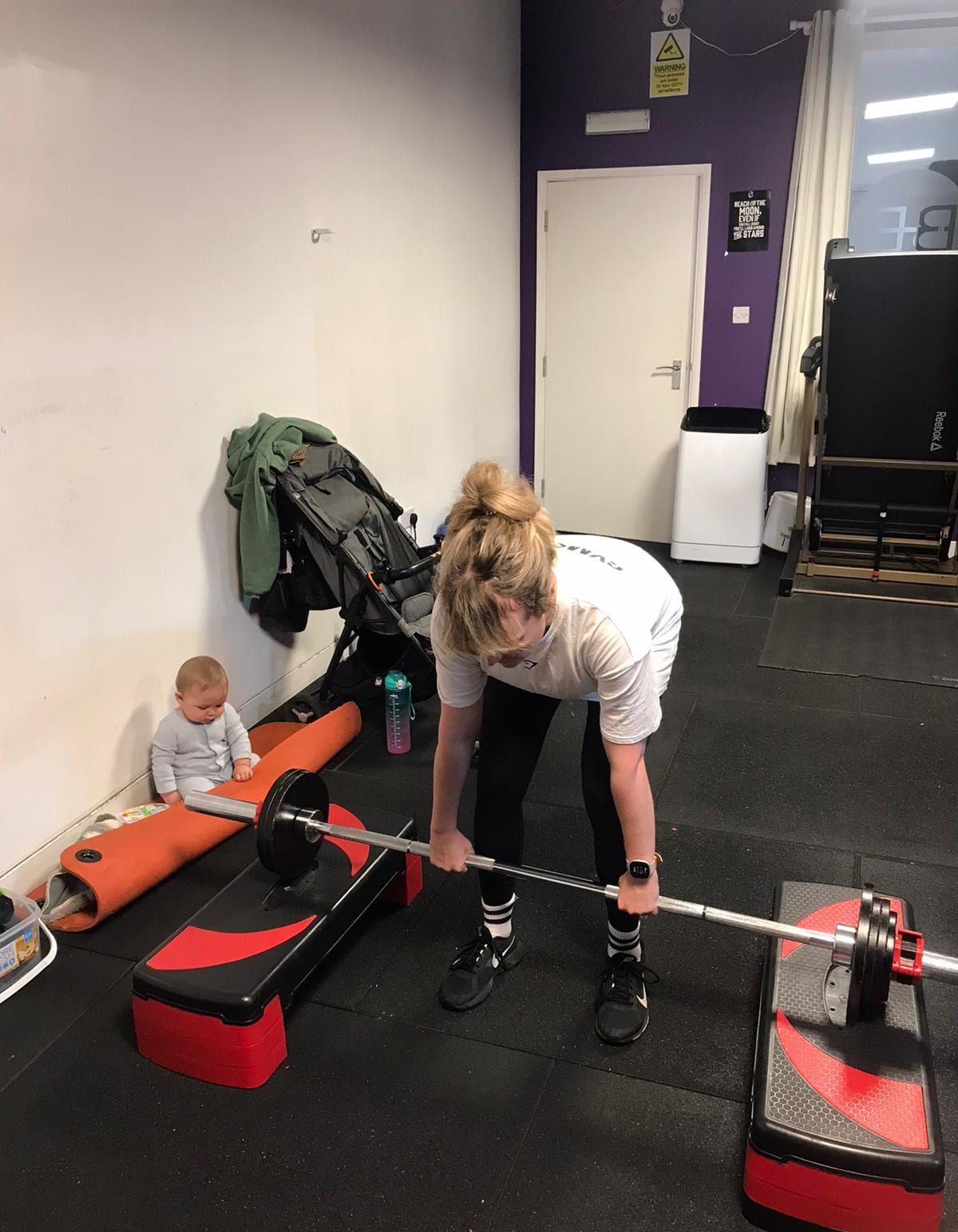
From there, many women move into postnatal fitness – reconnecting breath, core and pelvic floor before loading heavily – or into the 6-week Kick Start in a small coached group. Babies are welcome at 1-to-1 sessions, small group personal training and some quieter daytime large group sessions.
Reformer Pilates and recovery extras
Reformer Pilates can be part of a return once you have planned around healing – message us before you book. Mummy rehab massage is also available in the studio with Indy Massage & Spa.
If you are not sure where to begin, book a discovery call or WhatsApp the studio. Please do not put health details in online forms; tell your coach in person.
A gentle note
This article supports a safe return to activity. It does not diagnose diastasis, treat incontinence, or replace your postnatal medical care. When clinical questions arise, your NHS team comes first.
Ready when you are
You do not have to wait until you feel “back”. You can start where you are – with walking, pelvic floor work, and a studio that understands postnatal bodies.
Explore postnatal fitness · Right Start assessment · WhatsApp us
Frequently asked questions
When can I start exercising after birth?
Gentle walking and pelvic floor exercises can often begin when you feel ready after an uncomplicated birth. Wait for your 6 to 8 week postnatal check, and your GP’s go-ahead, before higher-impact work. Recovery takes longer after a caesarean or complications – ask your midwife or GP.
What is diastasis recti?
It is a common separation of the two long abdominal muscles as the womb grows. The NHS explains how to check the gap and notes that it often improves by around eight weeks. If a clear gap remains, speak to your GP; they may refer you to physiotherapy. Avoid jumping into sit-ups and planks early on.
What is a Right Start assessment?
At Be More Studio it is a one-hour coach-led check of posture, core, pelvic strength and a diastasis screen, with a clear idea of what to do next. It is not a medical diagnosis and does not replace your GP or a pelvic health physiotherapist.
Can I bring my baby to the studio?
Babies are welcome at 1-to-1 sessions, small group personal training and some quieter daytime large group sessions. Message us so we can plan around feeds and naps.