
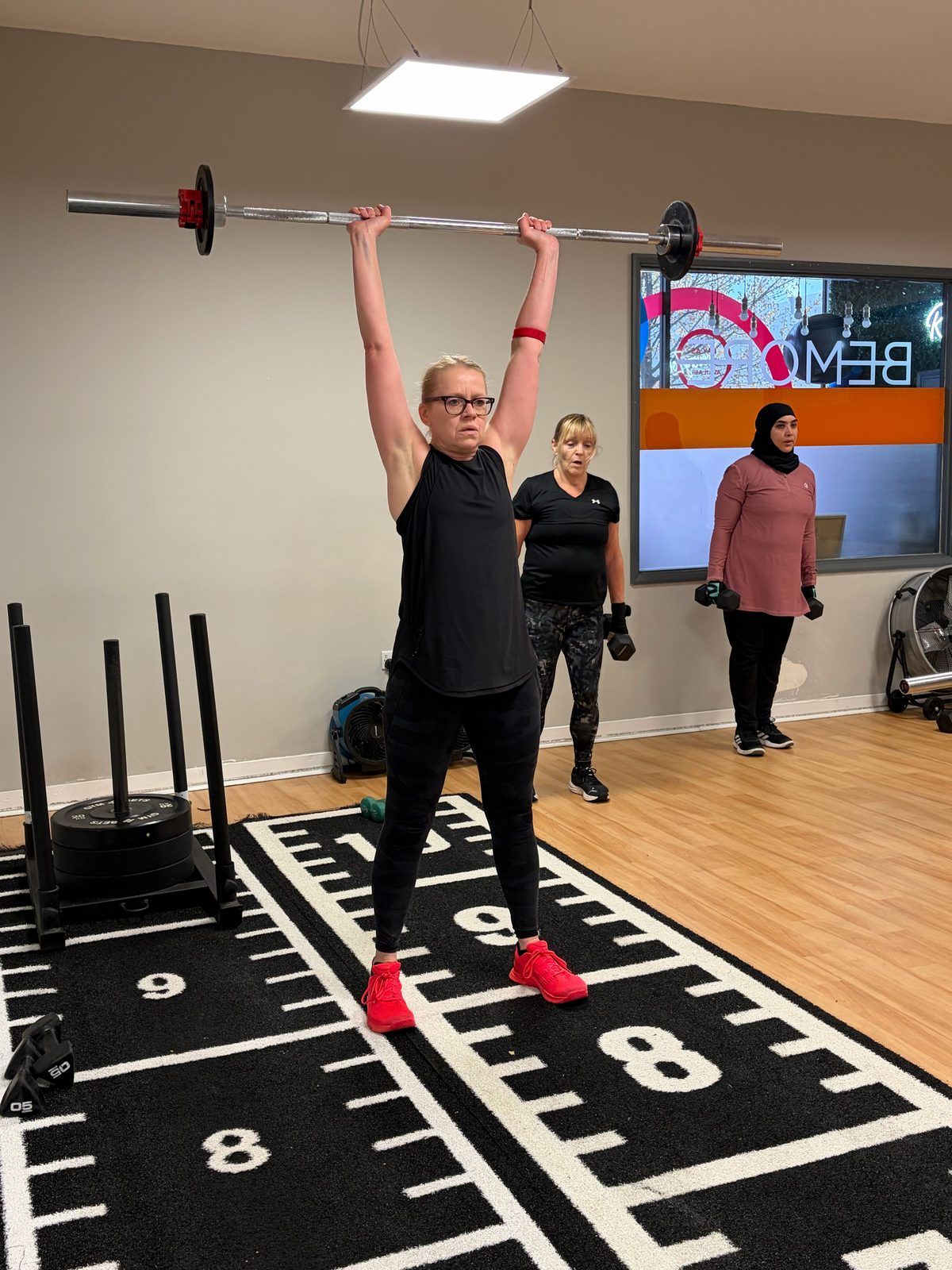
Perimenopause and menopause can feel like the ground has shifted under you. Sleep frays. Joints ache. Clothes fit differently. Confidence wobbles. None of that means you have to shrink your life to match.
Strength training will not fix every symptom, and it is not a medical treatment. What it can do is give you a practical way to look after muscle, bone and mood while your hormones change – so you feel capable in your body again. That is what thriving looks like day to day: picking up the shopping, keeping up with the people you love, and trusting that your body still works for you.
This guide is for women in Cheam, Sutton and nearby who want clear, calm advice. It is not medical advice. If you have a health condition, unexplained pain, a history of fractures, or you are thinking about hormone treatment, speak to your GP before you change how you train.
Why strength training matters in midlife
As oestrogen falls through perimenopause and menopause, many women notice changes in muscle, bone, body composition, sleep and mood. You do not need a stack of statistics to take that seriously. The helpful part is knowing that movement – especially strength work – is one of the lifestyle tools the NHS highlights for protecting bone health and overall wellbeing.
Muscle mass
Muscle is what lets you stand up from a chair, carry bags, climb stairs and recover from a busy week. Without regular challenge, muscle tends to decline with age. Strength training asks your muscles to work against resistance – your bodyweight, bands or weights – so they stay useful for the life you actually want to live.
Bone density
Bones respond to loading. Weight-bearing and resistance exercise help you look after bone strength when oestrogen is lower. The Royal Osteoporosis Society recommends strength exercise on two to three days a week for most people who are able, with rest between sessions. If you already have osteoporosis or have broken bones, get personal advice from a clinician before you start higher-impact work.
Joint health
Stiff or grumbly joints are common in midlife. Sensible strength work, done with good technique and gradual progress, can support the muscles around your joints so everyday movement feels more stable. That does not mean pushing through sharp pain. It means building capacity kindly.
Mood, sleep and energy
Exercise will not cure anxiety or insomnia, and we will not pretend otherwise. Many women do find that regular training helps them sleep more soundly and feel steadier in themselves. The NHS menopause pages also point to rest, routine and a balanced diet alongside activity. Strength sessions give your week a rhythm when everything else feels unpredictable.
Metabolism and body composition
Hormonal change can shift how your body stores fat and how easy it feels to stay at a comfortable weight. Strength training supports muscle, which matters for how your body uses energy. Pair it with food and sleep habits you can keep – not a crash plan – and give yourself time. Progress here is usually measured in months, not days.
Confidence
This one is hard to put on a chart and easy to feel. Knowing you can lift, push and pull with control changes how you walk into a room. For a lot of women at Be More Studio, that quiet confidence is the real win.
How to start safely
You do not need to be “fit already”. You need a starting point that respects where you are.
- Check in with your GP if you have heart concerns, uncontrolled blood pressure, recent surgery, pelvic floor symptoms you have not discussed, osteoporosis, or anything else that makes you unsure.
- Learn the basics with coaching. Set-up matters more than the number on the dumbbell. A coach can help you brace, breathe and move well before you add load.
- Start lighter than your ego wants. Two sessions a week of squats, hinges, pushes, pulls and carries is a solid foundation. Add weight only when the last few reps still look tidy.
- Leave rest between hard sessions. Muscles and connective tissue adapt when you recover. The Royal Osteoporosis Society suggests leaving at least a day’s rest between strength days.
- Include walking and daily movement. Strength is the priority for bone and muscle; easy aerobic time still supports heart health. The NHS suggests muscle-strengthening activity on at least two days a week for adults, alongside aerobic guidelines.
If you are returning after birth as well as navigating midlife, a Right Start assessment can give you a clear picture of posture, core and pelvic strength before you pile on load. That assessment is coach-led and is not a medical diagnosis.
What a sensible week looks like
There is no single perfect timetable. This pattern works well for many women who are building a habit:
- Two or three strength sessions (20–45 minutes). Cover legs, hips, back, chest, shoulders and arms. Think squat or sit-to-stand, hinge (such as a hip hinge or deadlift pattern), push, pull, and a simple brace or carry.
- One low-impact strength or control session, such as Reformer Pilates, if you want joint-friendly work that still challenges your core and posture.
- Walking most days, even in short bursts. It counts.
- One easier day with mobility, gentle yoga or simply rest.
If three gym visits feels like too much, begin with two. Consistency beats intensity when hormones are in flux.
Myths worth retiring
“Lifting will make me bulky.” Building large muscle is slow, deliberate work. Most women who strength train look more defined and feel more capable, not “bulky”.
“Cardio is enough.” Walking and classes that raise your heart rate are valuable. They do not replace dedicated strength work for muscle and bone.
“I am too old / too late.” Bone and muscle respond at every adult age when you train progressively and safely. Start where you are.
“I should wait until symptoms settle.” Waiting often means losing more capacity. Kind, coached strength work can sit alongside whatever medical care you and your GP decide on.
“I need a complicated programme.” You need a handful of big movements, good technique, and steady progress. Fancy is optional.
How Be More Studio can help
Be More Studio is a women’s wellness hub on London Road in North Cheam. The studio specialises in women’s health and fitness through every stage of life, including perimenopause and menopause.
Here is how that shows up in practice:
- Perimenopause and menopause fitness – strength-led support designed for midlife, so you are not trying to squeeze into a plan built for someone else’s body.
- MetStrong – a six-week strength and lifestyle course for women over 35, covering training alongside topics such as hormones, nutrition, stress and sleep.
- Strength classes and small groups – from coached lifting patterns to group classes and small group personal training, so you are never guessing alone under a barbell.
- Reformer Pilates – controlled, spring-based resistance that suits beginners and midlife joints, and pairs well with heavier strength days.
- Right Start assessment – if you are also postnatal, this one-hour check helps you understand your starting point before you rebuild.
If you are not sure which door to walk through, book a discovery call or WhatsApp the studio. You can also download the free Mastering your menopause e-book for practical lifestyle ideas.
A gentle note on health
Strength training supports wellbeing. It does not diagnose, treat or cure menopause, osteoporosis, pelvic floor conditions or any other medical issue. Use this article as a starting conversation with your own clinicians, not as a substitute for them.
Ready when you are
You do not have to wait for a perfect Monday. Two coached strength sessions, shoes you can walk in, and a studio that knows midlife bodies – that is enough of a beginning.
Explore menopause fitness at Be More Studio · Register interest in MetStrong · WhatsApp us
Frequently asked questions
Will strength training make me bulky?
Unlikely. Building large muscle takes years of specialised training and a lot of food. Most women notice they feel stronger, stand taller and find everyday tasks easier.
I have never lifted weights. Where do I start?
Begin with coached sessions so someone can check your set-up. Two short strength sessions a week, plus walking you enjoy, is enough to get going. Speak to your GP first if you have a health condition or a history of fractures.
Is Reformer Pilates enough on its own?
Reformer Pilates is an excellent low-impact way to build strength, posture and control. Many women pair it with heavier strength work as they progress. Choose the mix that fits your body and your week.
Do I need to be in menopause already?
No. Perimenopause is a good time to start, and MetStrong is aimed at women over 35 whether or not you have noticeable menopause symptoms yet.